Seeking reliable Mississauga tile contractors? Work with a local pro who understands local regulations, building codes, and weather-related challenges. Insist on TTMAC/TCNA compliance, moisture management, correct foundation materials, and control joints. Look for comprehensive project breakdowns, industry-approved adhesives, moisture barriers in water-prone areas, and well-maintained work spaces. Verify Ontario certifications, WSIB, protection policies, and protection agreements. Compare apples‑to‑apples bids and tie payments to milestones. You'll see how to select materials, layouts, and schedules that meet approval requirements.
Essential Points
- Area professionals knowledgeable in Mississauga building codes, homeowner association requirements, necessary permits, and local environmental factors impacts structural components and winter-related challenges.
- Our qualifications feature provincial licensing, WSIB insurance, full liability insurance, and verified references with physical craftsmanship reviews.
- Written project proposals meeting TTMAC/TCNA standards, including substrate prep, moisture protection, control joints, and warranty specifications.
- Comprehensive quality control includes moisture evaluation, levelness and deflection verification, anti-fracture membrane and uncoupling solutions, and regulation-adherent moisture barriers for wet areas.
- Transparent project timeline with staged payment options, featuring comparable bids, dust management strategies, and documented post-installation care.
Benefits of Hiring Local Tile Specialists in Mississauga
Eliminate confusion by engaging local tile professionals who know Mississauga's construction standards, approval requirements, and climate impacts on surfaces. You receive regulation-adhering installations, precise moisture control, and appropriate underlayment options for freeze-thaw cycles. Local professionals leverage area experience to source verified materials, arrange inspections, and collaborate with municipal inspectors. They understand slab flatness tolerances, expansion joints, and anti-fracture membranes designed for GTA conditions.
You get the advantage of a verified neighborhood reputation. It's possible to review nearby references, examine in-person workmanship, and confirm warranty responsiveness. Local contractors prioritize organized site operations, dust control, and secure entry in dense urban settings. They price transparently, align timelines with building regulations, and record specifications, surface preparation, and application materials. That diligence safeguards your investment and guarantees long-lasting, up-to-code results.
Professional Services: Bathrooms, Floors, and More
Leveraging local code knowledge functioning in your favor, you can select targeted tile services that suit your space and performance requirements. For kitchen backsplashes, you receive clean substrate preparation, exact layout, tight joints, and grout sealing that streamlines maintenance. In bathrooms, we install code-compliant waterproofing, drainage-ready pans, moisture control, and expansion joints, then complete with environmentally conscious adhesives and low-VOC grouts. On floors, we evaluate deflection, install anti-crack membranes or uncoupling systems, and set tiles with precise trowel patterns for maximum evenness and longevity.
We also design and craft feature walls that adhere to fire ratings, attachment specifications, and load requirements, carefully including niches and lighting cutouts with exacting tolerances. You'll receive clear project scopes, dependable timeframes, and written guarantees, ensuring your tiled surfaces look stunning and perform optimally for years into the future.
Choosing the Perfect Tile Materials for Your Area
While appearance is significant, you should choose tile according to material characteristics to usage requirements, weight loads, and water exposure. In moisture-prone spaces, specify porcelain with low water absorption (≤0.5%) and anti-slip ratings per ANSI A326.3. In heavily trafficked areas, select PEI 4-5 wear ratings and rectified edges for tight grout joints. Natural stone demands proper porosity sealing and deflection checks (L/720 for stone assemblies). In kitchen spaces, opt for stain-resistant glazed porcelain; for shower installations, ensure waterproofing with ANSI A118.10 membranes.
If sustainability is your priority, explore eco-friendly ceramic materials with recycled content and low-emission setting materials. When installing radiant floor heating, ensure your materials are rated for thermal flooring, utilize isolation membranes, and follow proper thermal sensor positioning specifications. Make sure to align your grout type and joint width with movement accommodation joints as specified in TCNA EJ171.
Design Guidance and Customization Options
You'll receive guidance on choosing the right materials that matches performance ratings, safety requirements, and upkeep objectives. We'll propose pattern arrangements and accent placements that control sightlines, reduce material waste, and comply with joint requirements. We'll work together to complete a design plan that harmonizes aesthetics, resilience, and code compliance.
Materials and Finishes Guide
Prior to picking tile, it's essential to determine the area's practical needs and visual objectives, then align materials and finishes to these requirements. For moisture-prone zones, choose porcelain with minimal moisture retention and a DCOF ≥ 0.42 for traction. For light-duty walls, glazed ceramic tile is sufficient; for heavy-use zones, evaluate heavy-duty options like quarry or sintered stone. Always check the freeze-thaw rating for exterior applications and chemical durability for kitchen and swimming pool applications.
Select finish by intended use: matte finish where traction is needed, honed surfaces to reduce reflections, polished only in moisture-free indoor areas. Align grout colorways to control appearance and grout line prominence. Select eco-friendly sealing products and low-emission setting compounds to achieve indoor air quality standards. Verify depth requirements, warpage tolerances, and squared edges for tight seams. Confirm materials conform to established guidelines and local regulations.
Design Patterns and Layout Accents
When tile choices are finalized, develop a layout arrangement that harmonizes with spatial layout, movement paths, and maintenance goals. Running-bond, diagonal, and square-grid arrangements affect visual flow, anti-slip properties, and grout upkeep. Use a centered guideline and dry-lay technique to verify symmetry, trim positions, and entryway spacing. Place grout joints to prevent thin pieces at perimeters; ensure consistent joint widths according to ANSI A108 and TCNA standards.
Add herringbone accents to define key spaces or interface sections without impeding egress paths. Design contrast borders to outline kitchens, showers, or hearths, ensuring movement joints at boundaries and every 20-25 feet in interiors. Verify tile caliber and tone before installation. Coordinate thresholds with finished floor heights, include schluter profiles for clean terminations, and slope wet zones to approved drains.
Installation Process and Quality Standards
We begin with thorough pre-installation site preparation, including substrate assessment, moisture testing, floor leveling, and crack mitigation as specified by TCNA and manufacturer specifications. Next, we set layout control lines, keep uniform grout joints, and limit lippage within ANSI A108 specifications utilizing calibrated spacers and leveling systems. During installation, we record components, cure times, and bond strength tests to guarantee your project meets code and warranty requirements.
Pre-Installation Site Preparation
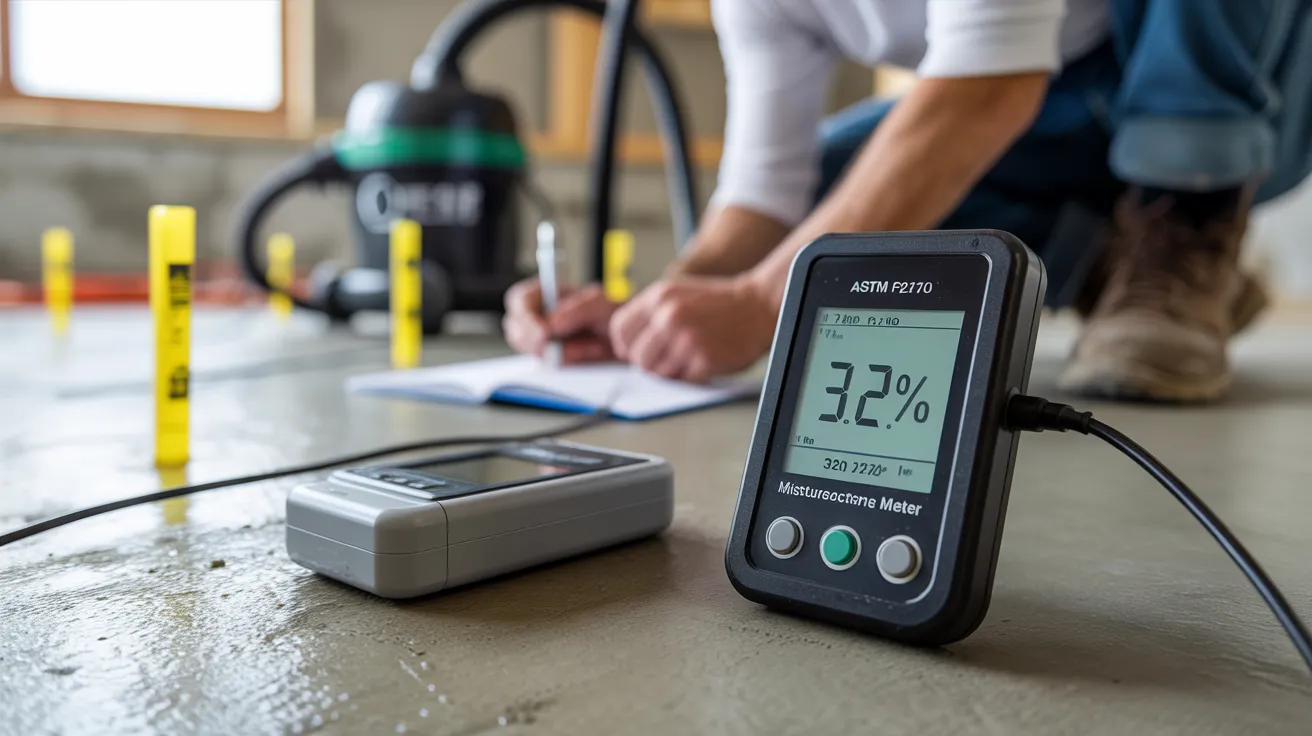
Ensuring project success begins with meticulous site preparation that meets code and manufacturer specifications. Start by completing a documented substrate analysis: check structural load capacity, flatness tolerances (generally 1/8" in 10'), and deflection limits as specified by TCNA/ANSI. Locate and identify cracks, hollow spots, contaminants, and incompatible coatings. Next, conduct moisture testing-ASTM F2170 or F1869 as applicable-and apply moisture mitigation when readings exceed the tile system's limits. Address plane and level with appropriate patching compounds, then roughen, clean, and vacuum to establish a proper surface.
You establish movement joints following EJ171, address entrance areas and transitions, and confirm heating mat installations comply with depth and listing specifications. Finally, arrange supplies, verify lot consistency, condition as needed, and confirm ambient conditions-temperature, ventilation, and humidity-are within specified ranges.
Precision Tiling Standards
Perform the installation following TCNA, ANSI A108/A118/A136, and manufacturer specs, documenting every phase for documentation. Verify substrate levelness within exact tolerances, appropriate plane, and required slope to drain. You select mortars and membranes based on exposure, deflection, and bond specifications, then key-in and comb notches in one direction to achieve prescribed coverage. Place tiles with reduced lippage, check joint arrangement, and keep movement joints following EJ171.
You implement grout specification based on joint width, traffic, and chemical exposure, then blend, install, and shape within allowable temperature and humidity ranges. You clear away remnants while preserving surface integrity and ensure proper curing following manufacturer guidelines. You perform pull tests, coverage checks, and layout audits, generating visual evidence and documentation that prove compliance and assure lasting performance.
Maintaining Value: Durability and Long-Term Care
While design influences choices, durability, care requirements, and lifetime expenses define actual value. You require systems that can handle wear, water exposure, and temperature changes without early breakdown. Choose tile with established resilience and a PEI or DCOF value matching the intended use. Porcelain is our choice for high-use areas and straight edges where narrow joints are needed. Emphasize grout performance with modified or epoxy grout compounds, appropriate for exposure levels and cleaning protocols. Install ANSI A118-certified mortars and control joints as specified by TCNA EJ171 to control expansion. Seal natural stone per manufacturer instructions; confirm cleaner compatibility. Schedule periodic inspection of sealants, changeovers, and caulked joints. With appropriate surface preparation, moisture protection, and air flow, you'll reduce callbacks, extend service life, and protect long-term value.
Cost Estimates, Timelines, and Project Planning
Prior to starting construction, make sure to get a comprehensive written agreement that matches project scope, costs, and timeline. Clearly specify materials, labor, substrate preparation, waterproofing, and trim elements. Request surface area computations, tile arrangement diagrams, grout specifications, expansion joint placements, and industry specifications for wet areas. Specify in detail tearout processes, material disposal, and dust control measures.
Set a realistic budget with a ten to fifteen percent contingency buffer for unanticipated surface issues or building regulation upgrades. Request unit rates for add/alternate items so modifications are clear. Verify lead times for tile, membranes, trims, and specialty drains to avoid timeline delays.
Map out key milestones: procurement, demolition, substrate correction, dry-fit, installation, cure times, and final sealant. Incorporate permit timelines where applicable and note inspections that can pause work. Structure payment schedule around achievement points instead of fixed dates.
How to Choose and Hire the Ideal Professional
When a quote appears attractive, carefully assess the contractor with the same detailed approach you dedicate to specs and codes. Initiate contractor screening by checking professional credentials through Ontario's regulatory bodies and WSIB coverage. Make sure to verify liability insurance and obtain a written scope that aligns with TTMAC standards, including substrate preperation and waterproofing details.
Prepare focused interview inquiries covering: who will handle the installation, spacing specifications, control joints, grout type, cure schedules, dust control, and site protection. Request a detailed schedule with milestones and change request process. Obtain a formal warranty agreement.
Conduct detailed reference verifications with previous clients and suppliers; validate schedule adherence, workmanship, and deficiency resolution. Review a current jobsite for protection measures and cleanliness. Compare click here bids on equal terms on materials, preparation, and finishes. Opt for proven expertise over cheapest quote.
Questions & Answers
What Are Your Options for Eco-Friendly and Recycled Tiles and Adhesives
Indeed, there are eco-friendly tile options and low-VOC adhesives. We provide sustainable materials, such as repurposed ceramics, glass, and porcelain tiles, obtained from verified eco-conscious manufacturers. We specify eco-safe, water-based, and GREENGUARD/LEED-verified adhesives and grouting materials. You'll get information about traction ratings, emission limits, and long-term expenses. We check environmental documentation, authenticate recycled components, and maintain installation standards. We minimize environmental impact through accurate takeoffs, responsible disposal, and optional thinset recycling programs.
Is It Possible to Combine Radiant Floor Heating and Tile Installation?
Absolutely, you can integrate radiant floor heating with tile installations. We evaluate subfloor requirements, insulation needs, and system demands, then specify Electric heating mats for specific areas or Hydronic heating for whole-house coverage. We adhere to electrical and plumbing codes, apply decoupling membranes, and set thin-set coverage to manufacturer specs. We confirm sensor placement, expansion joints, and GFCI protection. Lastly, we activate the system, document warranties, and arrange a systematic warming process to safeguard grout and tile.
What Guarantees and Warranties Are Available for Workmanship and Materials
We offer a Lifetime warranty on specific materials supported by manufacturers and a five-year Labor warranty on our workmanship. Our installation follows in accordance with TCNA standards and local building codes, documenting complete installation details and materials used. We register product warranties, deliver written warranty certificates, and perform post-install inspections. In the event of installation-related defects, we'll remedy them-repair or replace-at no cost. Warranty does not cover damage from misuse, building shifts, water damage, or improper care.
How Do You Handle Unexpected Structural Issues Found During Tiling
Work is paused to document all findings and brief you on project parameters, expenses, and schedules. Safety measures are implemented to segregate damaged zones and arrange for structural evaluations. Building permits are managed while providing detailed plans and maintaining code compliance. Upon your approval, underlying surfaces are repaired, compromised joists and underlayment are replaced, and proper waterproofing, vapor barriers, and crack prevention systems are placed. Project changes are recorded, cleanliness standards are upheld, and tiling resumes only after verification is complete and structural integrity is confirmed.
Is Your Business Insured for Liability and Workers' Compensation in Ontario?
Yes, you should confirm that we maintain active liability coverage and workers' compensation in Ontario. We will provide insurance certificates designating you as the certificate holder, showing policy limits, copyright details, and effective dates. Our WSIB clearance verifies coverage and good standing. We follow OHSA requirements, perform site-specific hazard assessments, and implement PPE and safe-work procedures. Ask for updated documents before work begins and at critical points to ensure complete insurance coverage compliance.
Final Thoughts
When all is said and done, you're investing in proven results, not hollow guarantees. The belief that "all tile contractors are equal" falls short under actual use-much like grout that hasn't properly cured. When you select qualified Mississauga professionals, you receive preparation that meets all codes, standard ANSI/TCNA procedures, documented warranties, and trackable timelines. Your installations resist water, shifting, and deterioration because essential details-flex points, substrate levelness, waterproofing-are essential requirements. Demand transparent pricing, sample installations, and quality assurance milestones. You don't take chances with surfaces; you establish performance standards, and you confirm the outcome.